

Project solutions
Tunnel / underpass
Tunnels and underpasses sit in wet ground, so water through joints and cracks is the main problem. Sprayed concrete, sheet membranes and injection are the usual tools.
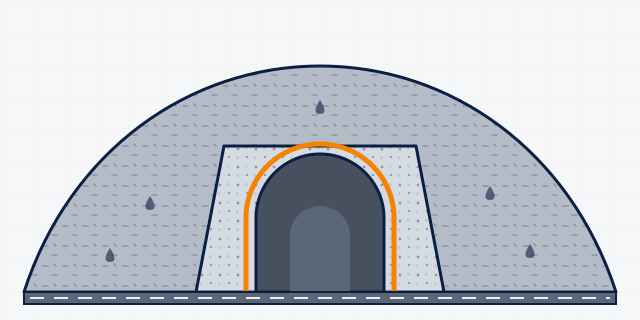
Solutions in build order
What this project needs, step by step
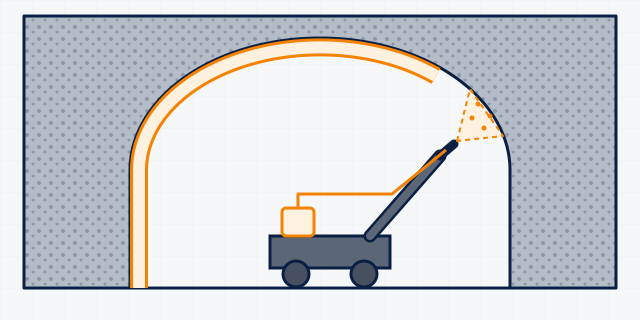 Shotcrete, tunnels & slope stabilisation
Sprayed concrete supports tunnel faces, galleries and cut slopes and lines channels and pools. The system is a pumpable base mix with a superplasticiser, an accelerator dosed at the nozzle, and often fibres.
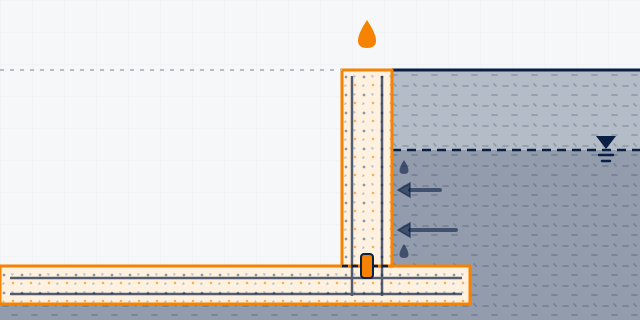 Waterproof (watertight) concrete
For basements, water tanks, pools and sewage works, make the concrete itself resist water with a low water–cement ratio, an integral waterproofing admixture and sealed construction joints. This is for new pours; it cannot fix a structure that already leaks.
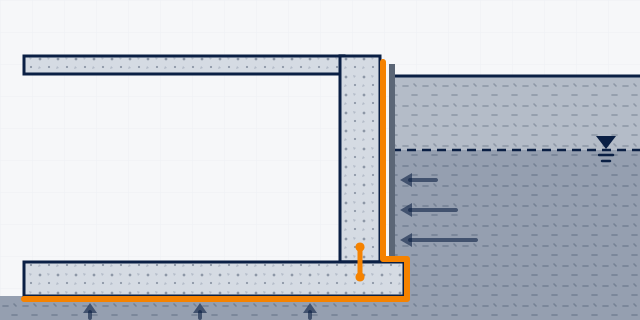 Basement waterproofing from outside (positive side)
For new basements, or where the soil can be dug away, stop water on the face that the soil and groundwater press against. Build watertight concrete, seal every joint, coat or sheet the outside face, then backfill carefully.
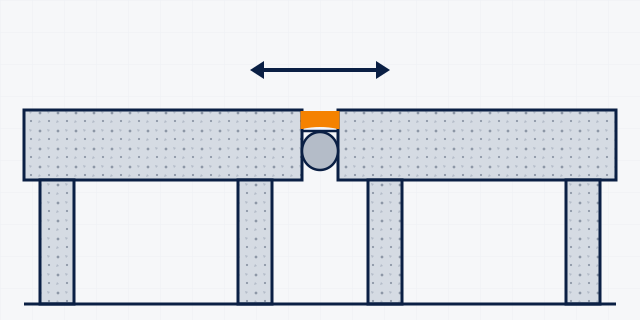 Building expansion and movement joints
The gaps between building blocks, slabs, walls and roofs that let the structure expand, shrink and settle. They need a sealant or tape matched to the movement, a correctly sized joint and a backer rod, or water gets in and edges break.
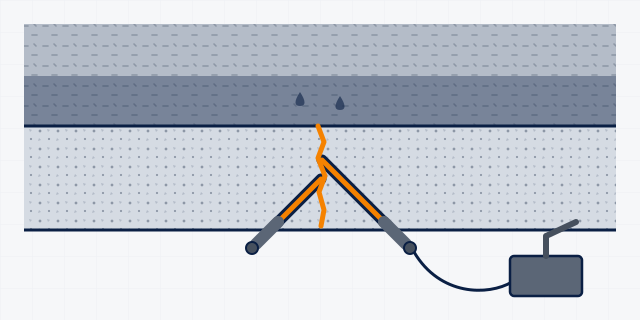 Leaking cracks & active water seepage
Cracks and holes that let water through basement walls, tanks, roof slabs or retaining walls. First stop running water, then seal the crack with elastic injection, then waterproof the surface; rigid epoxy is not used while a crack is wet.
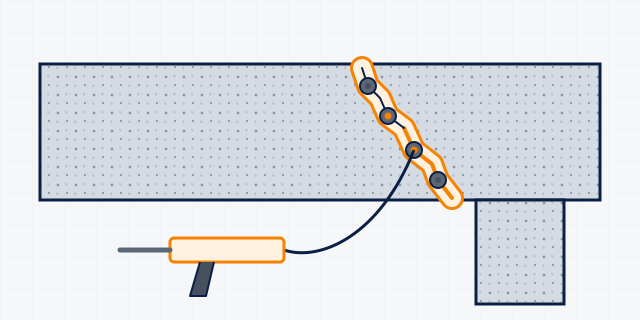 Structural cracks in beams, columns & slabs
Cracks in load-bearing members can come from overload, settlement, corrosion or design faults, so an engineer must find the cause first. Dry or damp cracks are then bonded by epoxy injection; leaking cracks follow the leaking-cracks guide.
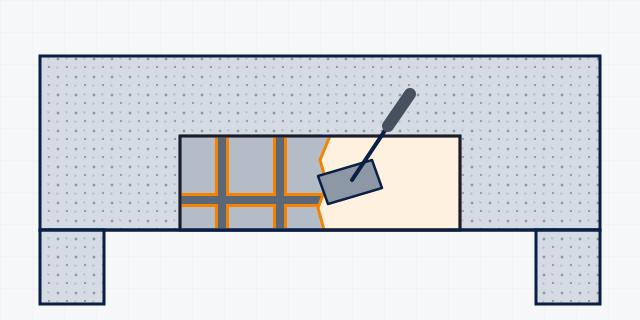 Spalling concrete (chhajja, balcony, beam, column)
Concrete that cracks, bulges and falls away, usually with rusty steel behind it, on chhajjas, balcony slabs, beams, columns and tank slabs. This guide follows the EN 1504 sequence: remove, protect the steel, rebuild, seal and protect.
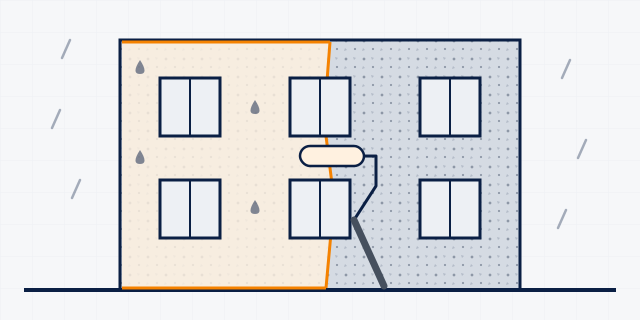 Protective coatings & water repellents for concrete
Coatings and impregnations that keep water, chlorides and carbon dioxide out of concrete facades, bridges, car parks and repaired structures. Choose a clear impregnation, an anti-carbonation coating or a crack-bridging coating to suit the exposure.