

Project solutions
Water treatment plant
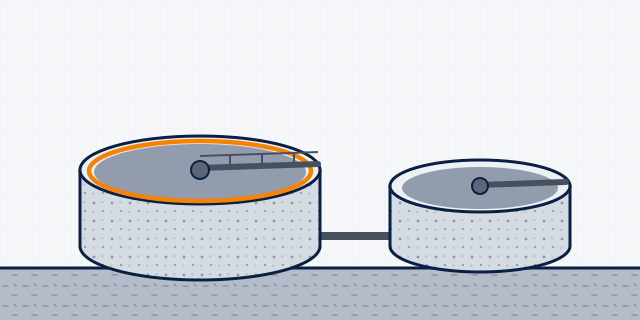
Treatment plants are full of water-retaining concrete: clarifiers, filters and clear-water reservoirs. Any part that holds drinking water needs linings and sealants whose data sheet allows drinking-water contact.
Solutions in build order
What this project needs, step by step
 Waterproof (watertight) concrete
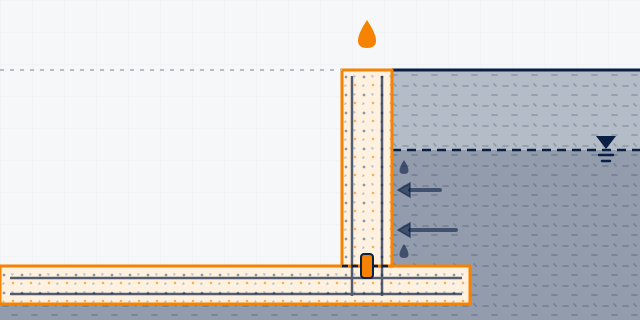
For basements, water tanks, pools and sewage works, make the concrete itself resist water with a low water–cement ratio, an integral waterproofing admixture and sealed construction joints. This is for new pours; it cannot fix a structure that already leaks.
 Building expansion and movement joints
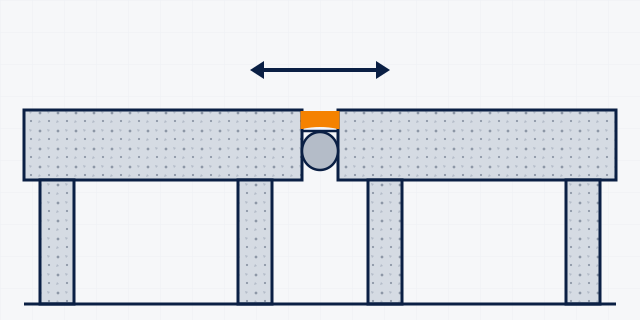
The gaps between building blocks, slabs, walls and roofs that let the structure expand, shrink and settle. They need a sealant or tape matched to the movement, a correctly sized joint and a backer rod, or water gets in and edges break.
 Pipe and service penetrations
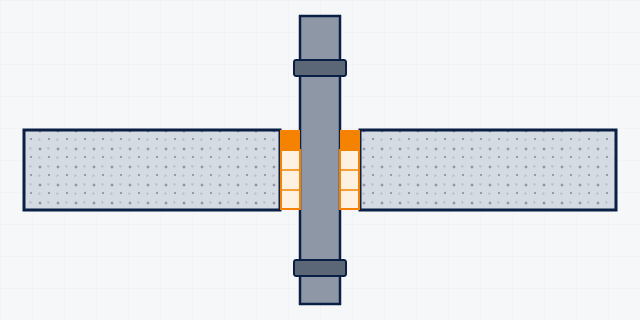
Pipes, ducts and cables passing through basement walls, tank walls, roofs and fire-rated floors are weak points for water and fire. Seal each one for its job: watertight, weathertight, fire-rated, or a simple interior gap.
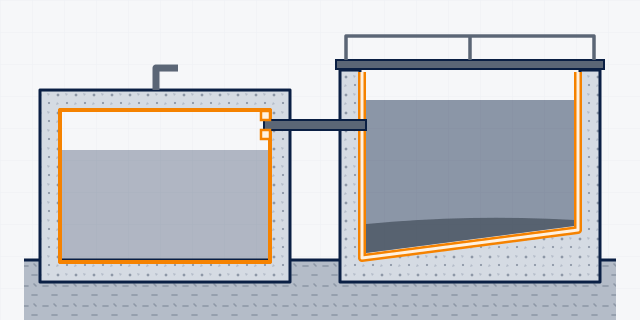 Water & wastewater treatment plants
Clarifiers, filter beds, clear-water reservoirs and process tanks need watertight concrete, sealed joints and the right lining for each water type. Drinking-water compartments take only products approved for potable contact.
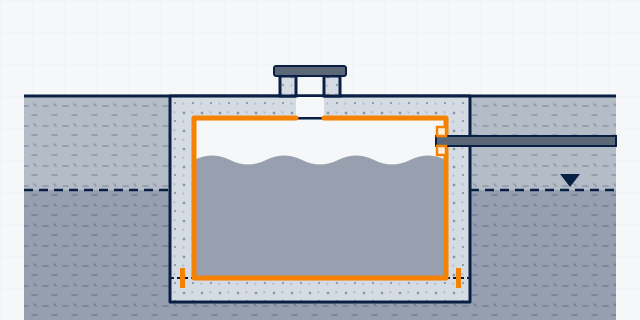 Underground water tank
Below-ground tanks leak out when full and let groundwater or dirty water seep in when empty. Plug and repair, then line the inside with a drinking-water coating; on new tanks, build watertight concrete and joints first.
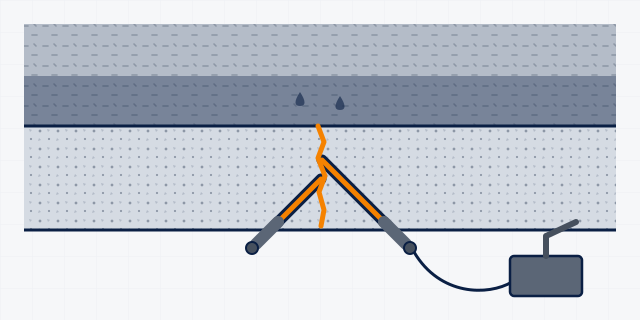 Leaking cracks & active water seepage
Cracks and holes that let water through basement walls, tanks, roof slabs or retaining walls. First stop running water, then seal the crack with elastic injection, then waterproof the surface; rigid epoxy is not used while a crack is wet.
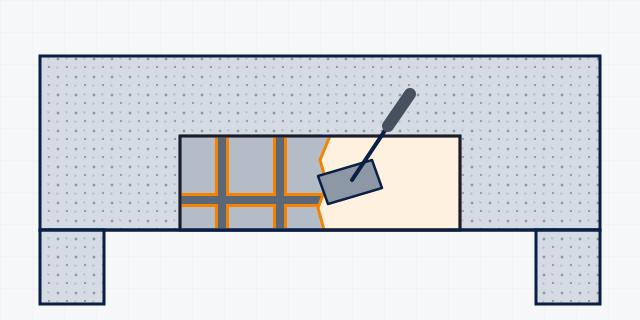 Spalling concrete (chhajja, balcony, beam, column)
Concrete that cracks, bulges and falls away, usually with rusty steel behind it, on chhajjas, balcony slabs, beams, columns and tank slabs. This guide follows the EN 1504 sequence: remove, protect the steel, rebuild, seal and protect.
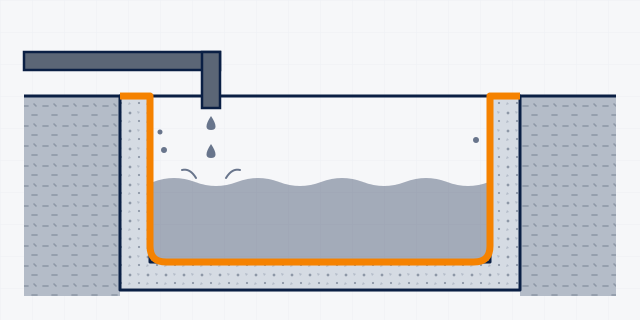 Chemical-resistant protection (tanks, bunds, sewage)
Linings and coatings that protect concrete and steel from acids, sewage gases, fuels and industrial chemicals in treatment plants, chemical tanks, bunds and manholes. The coating is chosen for the actual chemicals, concentrations and temperatures, on a strong, prepared substrate.
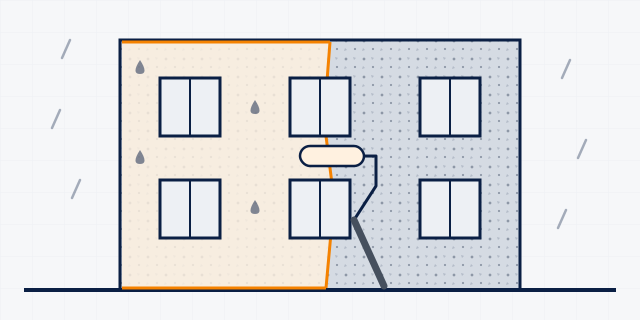 Protective coatings & water repellents for concrete
Coatings and impregnations that keep water, chlorides and carbon dioxide out of concrete facades, bridges, car parks and repaired structures. Choose a clear impregnation, an anti-carbonation coating or a crack-bridging coating to suit the exposure.