
Skip to content
Product finder

Load Transfer Gaps

Grouting gaps under plates & machines — Base plates, machine foundations. Show 3 products ↓

  1. Step 1 (completed)Grouting gaps under plates & machines
  2. ResultProducts & systems

Project type: Marine / port Clear ✕

Your products are below

For this problem the location does not change the recommendation.

Your selection

Problem
Grouting gaps under plates & machines
Location
Any
Products
3
Ask on WhatsApp Start again
Products for this problem

Matching products (3)

SikaGrout®-114 PK

SikaGrout®-114 PK

Sika Confirm availability

Why: SikaGrout®-114 PK is used for grouting in the following: Machine foundations, Columns in pre-cast construction, Concrete anchors, cavities, gaps, and recesses. (TDS p.1)

  • SikaGrout®-114 PK is easy to use grout requiring only the addition of water.
  • Easy to mix
  • Good flow characteristics
Surfaces
concrete · steel/metal
System
Precision Grouting
⚠ 3 limitations to check
  • Ensure formwork is secure and watertight to prevent movement and leaking during placing and curing.
  • Where maximum thickness exceeds 75 mm, consider the use of Sikacrete®-113PP SA.
  • At high temperatures, use chilled water for mixing to keep grout mix temperature below 30°C.
TDS p.2
SikaGrout®-928

SikaGrout®-928

Sika Confirm availability

Why: SikaGrout®-928 PKprecision grout is used for grouting various applications such as: Machine foundations, Coloumns in precast costruction, Concrete anchors. (TDS p.1,2)

  • Impermeability to water.
  • High resistance to attack by lubricating oils.
  • High resistance to fatigue, thermal cycling and high temperatures.
Surfaces
concrete · mortar · steel/metal
Pack
25kg
System
Precision Grouting

Product facts on these cards are taken from the manufacturer data sheets (page cited on each card) and are being reviewed by our technical team. Always check the data sheet before use.

Step-by-step

Follow a complete solution

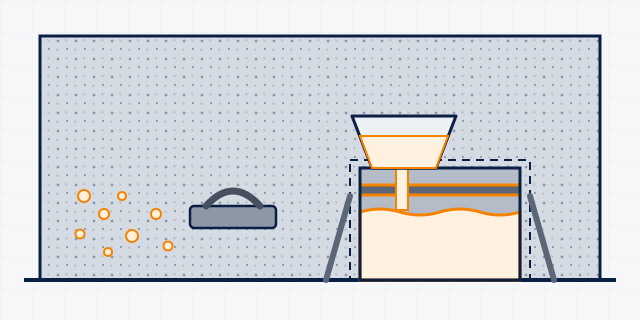
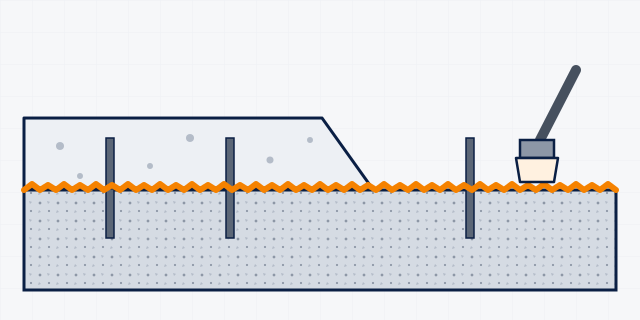
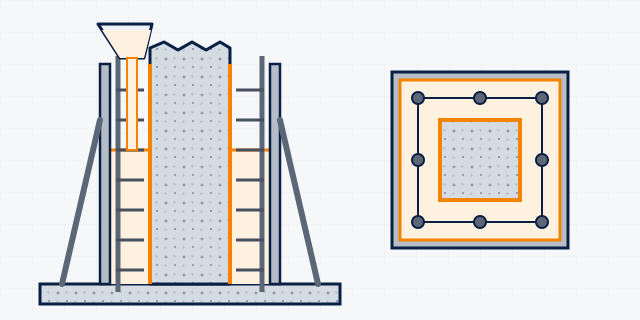
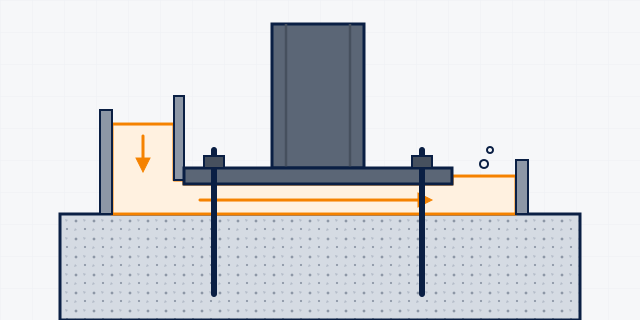
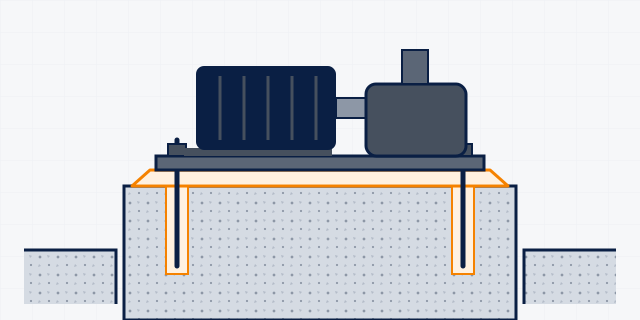
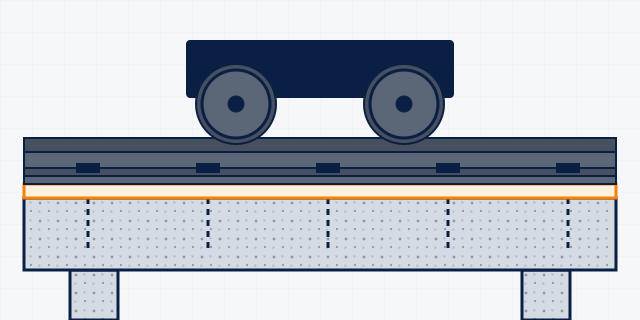
Concrete wall with small pores filled and smoothed, and a deep square pocket being filled with grout through formwork. Honeycombing, blowholes & voids Honeycombing is concrete where the cement paste did not fill the gaps between the stones, leaving pores, pockets or hidden voids, often after poor compaction or leaking shuttering. Small surface defects are filled with fine mortars; deep pockets in load-bearing members need assessment and a structural repair. 7 steps Old concrete slab with roughened top and dowels, a bonding coat brushed on, and new concrete placed over it. Bonding new concrete or mortar to old Joining fresh concrete, screeds, toppings, renders or repair mortar to existing hardened concrete, for slab thickening, extensions, toppings and repairs. The joint is only as good as the surface preparation and the bond coat. 7 steps Existing column in formwork with new bars and links, micro-concrete poured into the jacket; plan view beside it. Column jacketing with micro-concrete Enlarging and strengthening columns, piers or beams by adding steel and a flowable, non-shrink micro-concrete cast in formwork. Used for under-strength or badly damaged columns, extra floors and change of use, always to an engineer's design. 7 steps Steel column base plate with grout poured from a raised box on one side, flowing fully underneath to the far side. Base plate & bearing grouting Steel columns, bridge bearings and equipment sit on a layer of non-shrink grout that carries the load into the foundation. Choose the grout by gap depth, mix it with only the specified water, and pour it continuously from one side. 7 steps Motor and pump on a steel bedplate, bedded on grout over a concrete block with bolts set in grouted pockets. Machine foundations & equipment bedding Generators, compressors, presses, pumps and turbines need a foundation that carries vibration and impact without loosening. The usual build-up is engineered concrete, anchored or grouted holding-down bolts, and a high-strength non-shrink bedding grout. 7 steps Crane rail on a continuous grout bed along a concrete runway beam, with crane wheels running on the rail. Crane rail & runway grouting Overhead and gantry crane rails in workshops, steel mills and ports sit on grouted sole plates fixed with holding-down bolts. A high-strength, non-shrink grout with good fatigue and impact resistance keeps the rail level under repeated wheel loads. 6 steps
Advice

Not sure which one fits your site?

Send us the condition, the area and the surface. Your selection is already in the message.