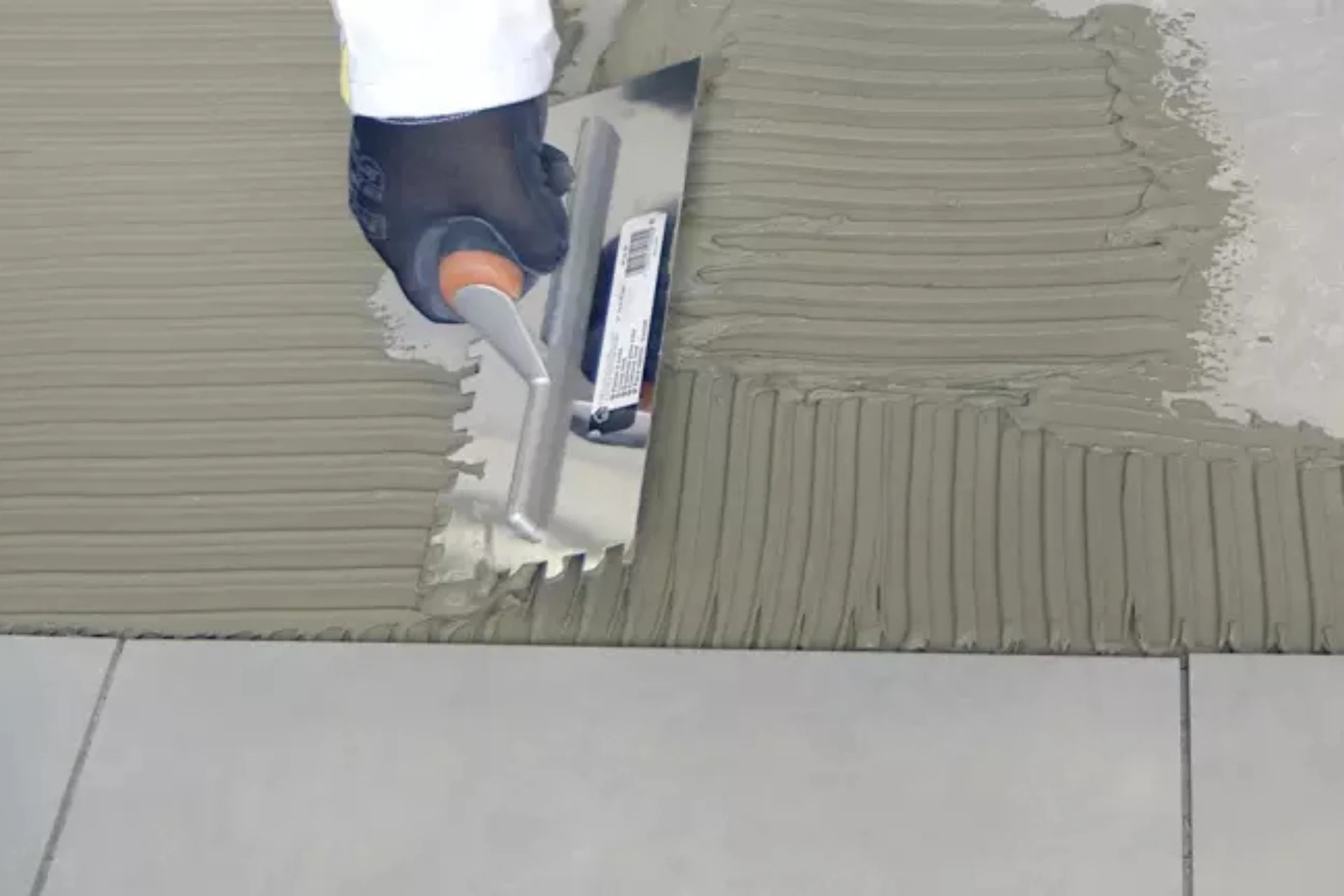
Tile adhesive helps fix tiles strongly on walls and floors. In construction, tiles need proper bonding with the surface. If workers use the wrong material or poor application method, tiles may become hollow, loose, cracked, or uneven over time.
For this reason, contractors use modern fixing products to improve bonding strength, surface grip, and long-term durability. These products are commonly used in homes, commercial buildings, bathrooms, kitchens, floors, walls, and renovation projects.
What Is Tile Adhesive?
Tile adhesive is a construction chemical product used to bond tiles to different surfaces. It is specially made to provide better adhesion, workability, and strength compared to ordinary cement-sand mortar.
This product helps with:
- Strong tile bonding
- Better wall and floor fixing
- Reduced hollow sounds
- Improved workability
- Better tile alignment
- Cleaner installation
- Longer tile life
In simple words, it helps tiles stick better and stay fixed for a longer time.
Why Contractors Use It
Tiles face many site challenges. Floors deal with foot traffic, cleaning, moisture, and movement. Bathrooms and kitchens face regular water exposure. Large-format tiles need stronger bonding because their size and weight make fixing more difficult.
Ordinary cement mortar may not always provide enough bonding strength, especially for modern tiles such as porcelain, vitrified, large-format, or low-absorption tiles.
For example, if a worker fixes large porcelain tiles with weak mortar, the tiles may not bond properly. As a result, they can sound hollow or become loose later. A proper fixing material helps reduce these problems by creating a stronger and more reliable bond.
For general tile installation guidance, you can also review recommendations from the Tile Council of North America.
Outbound link: https://www.tcnatile.com/
Main Types Used in Construction
1. Cement-Based Adhesive
Cement-based adhesive is one of the most common types. Workers mix it with water and apply it with a notched trowel.
Contractors commonly use it for:
- Ceramic tiles
- Porcelain tiles
- Wall tiles
- Floor tiles
- Bathrooms
- Kitchens
- General tile fixing
It provides better bonding and workability than ordinary cement-sand mortar.
2. Polymer-Modified Adhesive
Polymer-modified adhesive contains special additives that improve bonding, flexibility, and water resistance.
It is useful for areas where tiles need stronger adhesion or better performance, such as wet areas, exterior surfaces, and large-format tiles.
Common applications include:
- Bathrooms
- Balconies
- External walls
- Porcelain tiles
- Vitrified tiles
- Large-format tiles
For wet areas, proper waterproofing solutions should also be considered before tile installation.
Internal link suggestion: link waterproofing solutions to your waterproofing page.
3. Ready-Mix Adhesive
Ready-mix adhesive comes in paste form and does not need mixing with water. It is easy to apply and useful for small jobs or light-duty tile fixing.
Workers commonly use it for:
- Interior wall tiles
- Kitchen backsplashes
- Small repair work
- Light tile installation
However, ready-mix products may not be suitable for heavy tiles, wet areas, or high-load floor applications unless the product is designed for that purpose.
4. Epoxy Adhesive
Epoxy adhesive provides very strong bonding and high resistance to water, chemicals, and stains.
It is commonly used in:
- Industrial areas
- Hospitals
- Laboratories
- Commercial kitchens
- Chemical exposure areas
- High-performance tile installations
Epoxy systems are strong, but they usually need skilled application and proper surface preparation.
5. Flexible Adhesive
Flexible adhesive is used where surfaces may face slight movement, vibration, or temperature changes.
It is useful for:
- Balconies
- Terraces
- Exterior walls
- Large-format tiles
- Heated floors
- Areas with movement
Flexible products help reduce cracking and tile debonding caused by surface movement.
6. Products for Wet Areas
Some fixing systems are designed for areas exposed to moisture or water. These areas need better bonding and water resistance.
Common uses include:
- Bathrooms
- Kitchens
- Laundry areas
- Water tanks
- Swimming pool areas
- Wet walls and floors
For wet areas, waterproofing and adhesive selection both matter. Weak preparation can cause leakage, hollow sounds, or tile failure later.
Benefits for Tile Installation
The right product provides many practical benefits in construction. It improves tile bonding and reduces common fixing problems.
Common benefits include:
- Stronger tile bonding
- Better workability
- Reduced hollow sounds
- Improved tile alignment
- Better water resistance
- Cleaner application
- Less material wastage
- Longer-lasting tile installation
The correct fixing system helps reduce tile lifting, cracking, uneven fixing, and early failure.
Common Areas of Use
Tile fixing products are used in many construction areas, such as:
- Bathrooms
- Kitchens
- Living rooms
- Bedrooms
- Commercial buildings
- Shopping areas
- Hospitals
- Schools
- Exterior walls
- Balconies
- Floors
- Walls
They are especially useful where tiles need strong bonding, better finishing, and long-term durability.
How to Choose the Right Product
Choosing the right fixing material depends on the tile type, surface condition, area of use, and site requirement.
Before selecting a product, ask:
- Is the tile ceramic, porcelain, vitrified, or stone?
- Is the tile small or large format?
- Is the area indoor or outdoor?
- Is the surface wall or floor?
- Will the area face water or moisture?
- Is flexibility required?
- Is the surface concrete, plaster, blockwork, or old tile?
- Does the tile need high bonding strength?
The wrong product can cause hollow sounds, weak bonding, tile movement, cracks, or tile failure. Therefore, technical guidance is important before choosing a fixing system.
Internal link suggestion: link technical guidance to your contact or consultation page.
Common Mistakes to Avoid
Tile fixing works well only when workers apply the product correctly. Some common mistakes include:
- Applying product on dusty or weak surfaces
- Using the wrong material for the tile type
- Adding too much water during mixing
- Using cement mortar for large or low-absorption tiles
- Not using a notched trowel
- Applying adhesive too thick or too thin
- Fixing tiles before waterproofing wet areas
- Ignoring open time and curing time
These mistakes can reduce bonding strength and cause tile failure later.
Conclusion
Tile adhesive plays an important role in modern tile installation. It helps improve bonding strength, workability, tile alignment, water resistance, and long-term durability.
From cement-based products and polymer-modified systems to epoxy and flexible options, each type solves a different tile fixing problem. For contractors, builders, and project teams, the goal is not just to stick tiles to a surface. The real goal is to choose the right product for the right tile, surface, and site condition.
Need help choosing the right tile adhesive for your project? Contact MCT Chemicals for product guidance and project supply support.
Tile adhesives and grouts supplied by MCT Chemicals
- Tile installation systems
- Browse all tile adhesives
- SikaCeram®-205 PK — cementitious tile adhesive
- SikaCeram®-850 Design — epoxy tile grout
Request a quotation or technical guidance from MCT Chemicals — Islamabad and Rawalpindi, supplying nationwide.