
Sika® Injection-101 RC
Sika Confirm availability
Low-Viscosity, Fast-Foaming Polyurethane Injection Resin for Water-Stopping
Data sheet details on request.


Popular: Sikaflex · waterproofing · grout · data sheets
Ground water coming in — Basements and foundations below the water table. Show 2 products ↓
Low-Viscosity, Fast-Foaming Polyurethane Injection Resin for Water-Stopping
Data sheet details on request.

Two-Component Polyurethane Injection Resin for Crack Sealing
Data sheet details on request.
Product facts on these cards are taken from the manufacturer data sheets (page cited on each card) and are being reviewed by our technical team. Always check the data sheet before use.
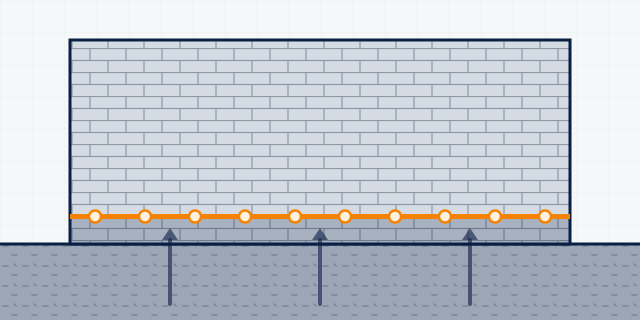 Rising damp in walls
Ground moisture rising up masonry walls that have no damp-proof course, or a failed one, causes seelan, salts and peeling paint near the floor. The fix is a new chemical damp-proof course injected into a mortar joint, followed by re-plastering.
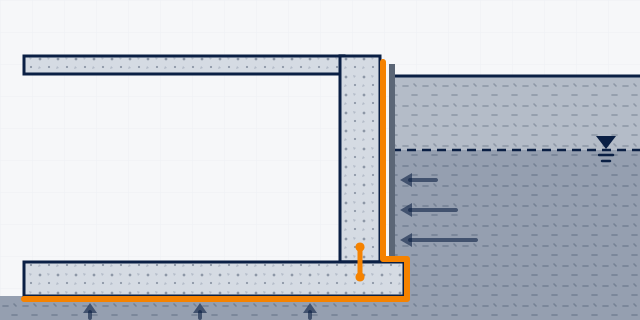 Basement waterproofing from outside (positive side)
For new basements, or where the soil can be dug away, stop water on the face that the soil and groundwater press against. Build watertight concrete, seal every joint, coat or sheet the outside face, then backfill carefully.
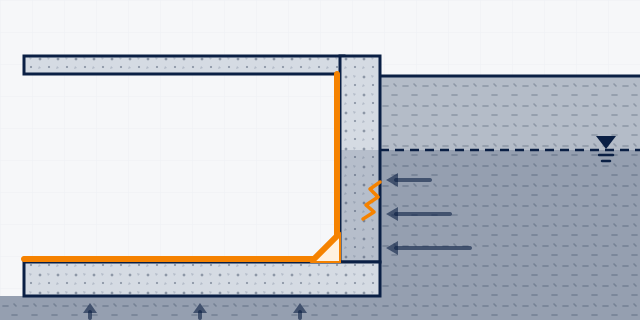 Basement waterproofing from inside (negative side)
In an existing basement where the outside cannot be dug out, water is stopped on the inside face. Plug active leaks, inject leaking cracks, then apply a cement-based coating that works against water pressure from behind.
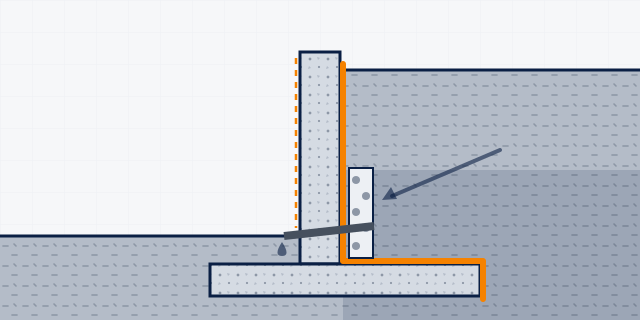 Retaining walls
Walls that hold back soil and water, such as boundary walls on slopes, ramps, and the walls of basements and underpasses. Waterproof the soil face, seal the joints, and treat the exposed face and any leaks.
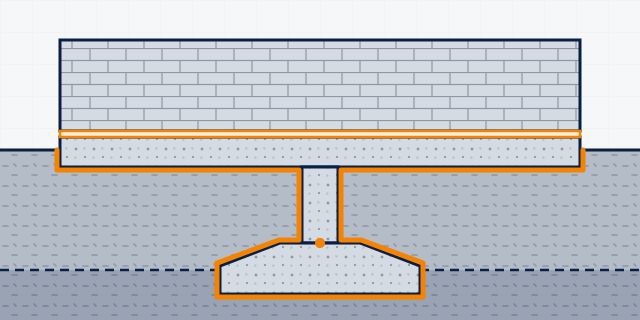 Foundations, footings and plinth
Protect footings, column stubs and plinth beams against groundwater and aggressive soil, and stop damp rising into the walls above. This is done during construction, before backfilling.
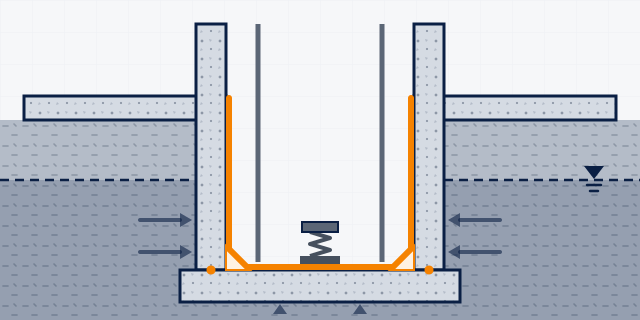 Lift pits and drainage sumps
Lift pits and drainage or sewage sumps are the lowest points in a building, so groundwater collects there. Build them watertight, seal the kicker joint, and line them with a slurry rated for water pressure.
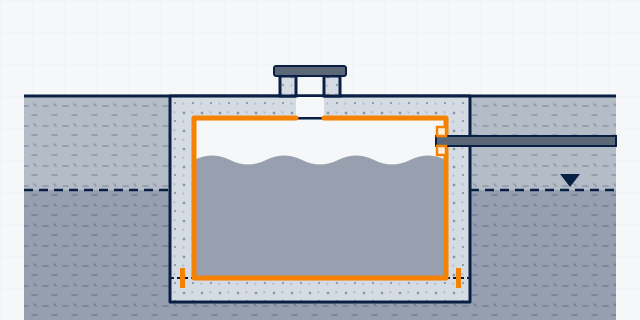 Underground water tank
Below-ground tanks leak out when full and let groundwater or dirty water seep in when empty. Plug and repair, then line the inside with a drinking-water coating; on new tanks, build watertight concrete and joints first.
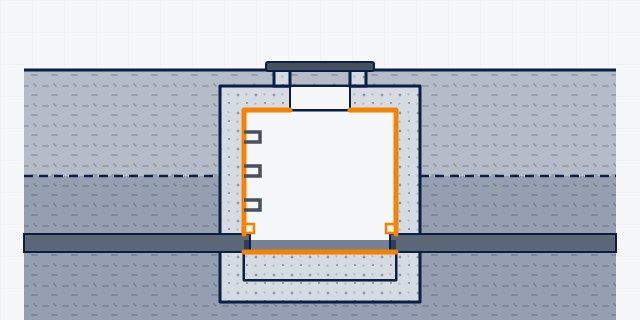 Sewage tanks, manholes & septic tanks
Sewage and wastewater structures leak out, let groundwater in and are eaten away by aggressive effluent. Plug and rebuild the concrete, waterproof it, and add a chemical-resistant lining where the effluent is aggressive.
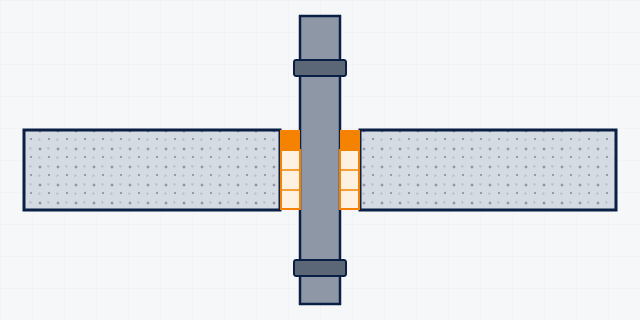 Pipe and service penetrations
Pipes, ducts and cables passing through basement walls, tank walls, roofs and fire-rated floors are weak points for water and fire. Seal each one for its job: watertight, weathertight, fire-rated, or a simple interior gap.
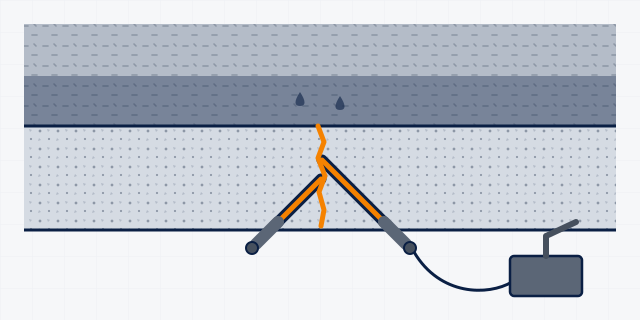 Leaking cracks & active water seepage
Cracks and holes that let water through basement walls, tanks, roof slabs or retaining walls. First stop running water, then seal the crack with elastic injection, then waterproof the surface; rigid epoxy is not used while a crack is wet.
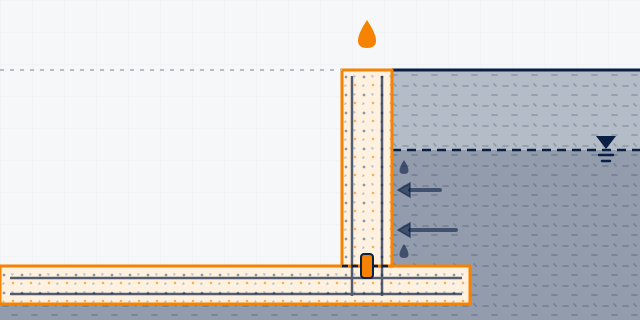 Waterproof (watertight) concrete
For basements, water tanks, pools and sewage works, make the concrete itself resist water with a low water–cement ratio, an integral waterproofing admixture and sealed construction joints. This is for new pours; it cannot fix a structure that already leaks.
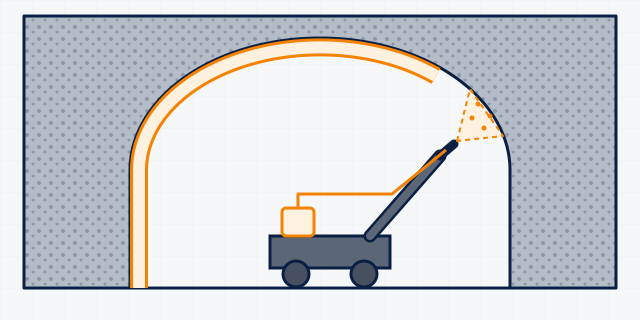 Shotcrete, tunnels & slope stabilisation
Sprayed concrete supports tunnel faces, galleries and cut slopes and lines channels and pools. The system is a pumpable base mix with a superplasticiser, an accelerator dosed at the nozzle, and often fibres.
Send us the condition, the area and the surface. Your selection is already in the message.